
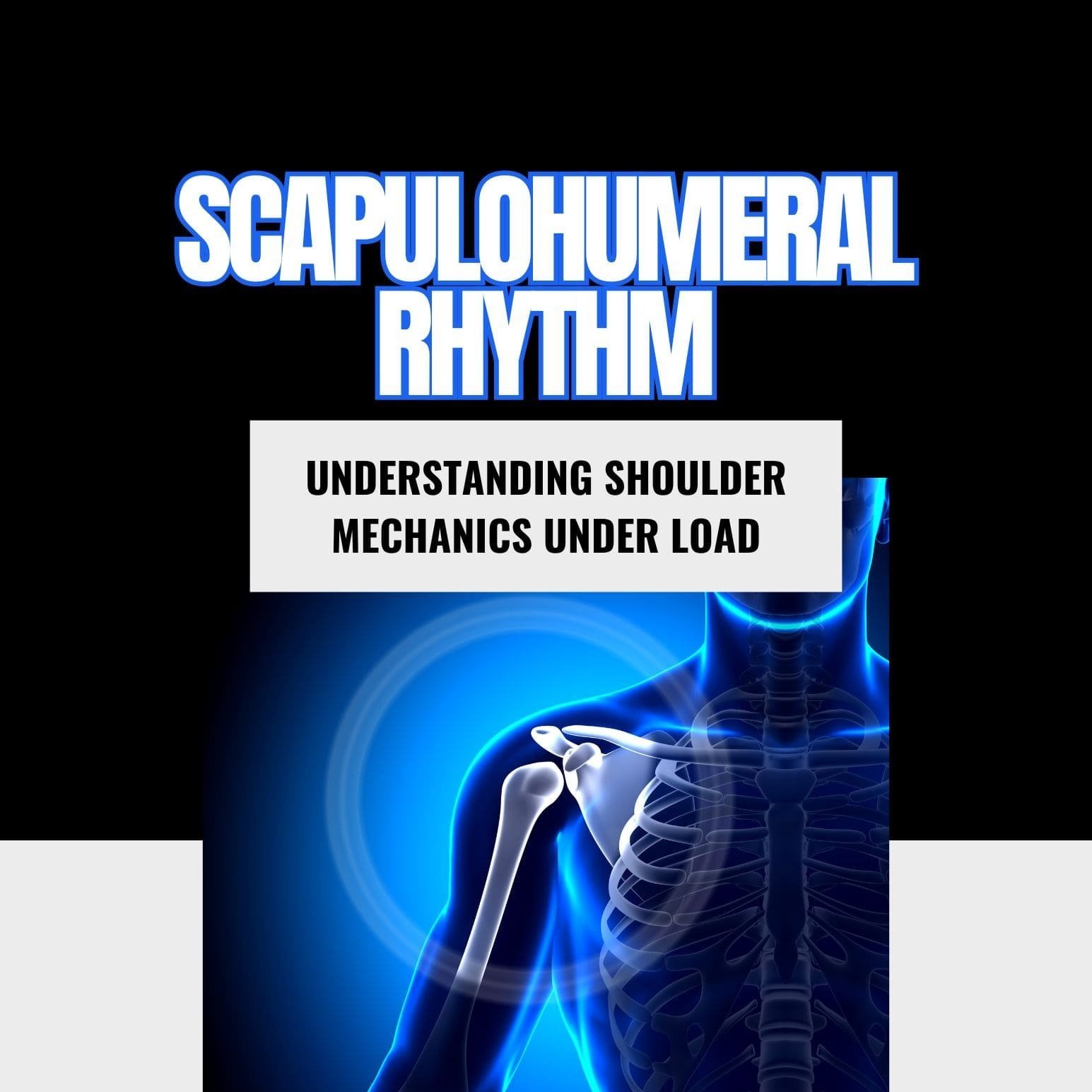
Scapulohumeral Rhythm: Understanding Shoulder Mechanics Under Load
The shoulder is the most mobile joint complex in the human body. Its ability to move freely in multiple planes is what enables pressing, pulling, reaching, and throwing—but this mobility demands finely tuned coordination between several anatomical structures. One of the most critical—and often underappreciated—of these is the scapulothoracic articulation.
When we talk about overhead pressing, benching, or any loaded upper-body movement, we must understand a key principle: scapulohumeral rhythm. This concept describes how the scapula and humerus work in concert, alongside the thorax, to create full, functional shoulder elevation. Without this rhythm, movement becomes dysfunctional, compensation increases, and injury risk skyrockets.

Aerobic Capacity vs. Aerobic Power: Understanding the Difference and How to Train Each Effectively
In the world of fitness, endurance sports, and hybrid competitions like functional fitness races, two terms often get thrown around when we talk about "cardio": aerobic capacity and aerobic power.
While they’re both part of the aerobic energy system, they’re not the same thing—and understanding the distinction is crucial for athletes and coaches who want to train smarter, not just harder.
This article will break down what the aerobic system is, define the differences between capacity and power, and provide sample workouts and time domains to help you program and train more effectively.
FITNESS RACE WORKOUTS: 6 PARTNER AND INDIVIDUAL WORKOUT OPTIONS
Understanding the Demands of Fitness Race Training
Fitness races are an exciting blend of functional strength, muscular endurance, and sustained aerobic output—all packed into one intense, repeatable race format. Unlike traditional gym workouts or obstacle courses, fitness races challenge athletes to maintain high effort across multiple stations and long distances, all while managing fatigue, transitions, and mental pacing.
Success in these events depends on:
Aerobic capacity – to handle repeated bouts of running and high-rep movements
Muscular endurance – especially in the legs, core, and grip
Functional strength – for sled work, carries, lunges, and more
Pacing strategy – to stay consistent without redlining too early
Mental grit – to push through discomfort over 60+ minutes of effort
The workouts in this article are designed to reflect these key demands—offering both individual and partner training sessions that simulate the race environment, build your engine, and prepare you for the unique challenge of fitness race events.

THE POWER OF DAILY MOVEMENT: WHY WALKING EVERY DAY CHANGES EVERYTHING
In a world that moves fast, sometimes the simplest habits have the most profound impact—and one of the most underrated, life-changing habits is this:

The Physiology behind fitness races of the future
While CrossFit emphasizes constantly varied functional movements using a broad range of energy systems, Fitness Races is a fixed-format endurance event designed to test aerobic capacity and muscular stamina under consistent, measurable standards.
Fitness Races are less skill-intensive but far more grind-based, favouring those who can maintain output over 60+ minutes, with pacing and fatigue resistance being key to success.

The Power of the Hang: A Daily Habit for Pain-Free Shoulders
There’s a simple, free, and wildly underrated practice that could change your shoulder health forever: hanging. That’s right—grabbing onto a pull-up bar, a set of rings, or even monkey bars and letting your body dangle. It might sound too good to be true, but if you’ve got shoulder pain, want to improve your grip, or just want to add years to your life, then this daily habit might be exactly what you need.

The Benefits of Hot Water Immersion
Hot water immersion (HWI), including hot baths, hydrotherapy, and hot tubs, has been used for centuries as a recovery and relaxation tool. In the context of modern sports and weightlifting, HWI has emerged as a scientifically supported recovery method that aids in muscle relaxation, circulation improvement, and overall nervous system restoration.
This eBook explores the science behind hot water immersion, its benefits for weightlifters and athletes, recommended protocols, and its role in optimizing recovery. Additionally, we examine the role of Epsom salt in baths and its claimed therapeutic effects.